Showing posts with label Reredos. Show all posts

Friday, February 4, 2022

Cathedral Church of St. Edmundsbury

In 1914, the former St. James' of Bury St. Edmunds became the cathedral church of the newly created Diocese of Edmundsbury and Ipswich. The original church was built in the Norman style and the nave dates to the early 16th century, but much of the current building was rebuilt and expanded since the 1960s. 

St. James' in 1779. Note separate Norman tower on the right.


St. James' circa 1870 after Scott's renovation.


St. James' in 2014 with its new, connected tower.

The redesigned chancel that G.G. Scott added in 1865-69 contained Salviati mosaics within alabaster reredos made by Farmer and Brindley and financed by bankers Oakes and Bevan. The raised quatrefoil center contained an alabaster cross flanked by the symbols for Alpha, Omega and XP on a golden mosaic base. The spandrils contained symbols of the Evangelists, as well as a pelican and the Holy lamb.

The chancel circa 1922 with the Salviati mosaics.

While the Baptismal font from 1870 (also by Scott) and numerous Victorian stained glass windows survived 20th century renovations, the reredos were removed and their fate is unclear.

Sources:

The National Archives. Cathedral Church of St. James, Bury St. Edmunds. Accessed January 30, 2022.
Barr, Sheldon. Venetian Glass Mosaics: 1860-1917. London: Antique Collectors' Club, 2008. 124.
Tymms, Samuel. "A Handbook of Bury St. Edmunds in the County of Suffolk." 6th ed. London, 1891. p. 57.
Churches and Family Tree. Stepneyrobarts blog post: Bury St. Edmunds. Accessed January 30, 2022.
St. Edmundsbury Cathedral. Accessed January 30, 2022.
Wikipedia, Photo by David Iliff: St. Edmundsbury Cathedral.
St. Edmundsbury Chronicle. Accessed January 30, 2022.
An antique line engraving published by F. Lankester. Circa 1870. Later coloured by hand.
Francis Frith: Bury St. Edmonds.


Sunday, January 30, 2022

St. Paul's Cathedral, Dundee

Located on the High Street in Dundee, this Scottish Episcopal church was built 1853-55 to designs by G.G. Scott. Constructed of brown sandstone in the Gothic Revival style, it wasn't dedicated until ten years later and it wasn't raised to cathedral status until 1905.


The large Salviati mosaic of Christ in Glory in the Clayton & Bell designed reredos dates to 1865.


From an 1887 guide to St. Paul's: "An elaborate piece of alabaster work with shafts of various marbles, and enclosing a rich piece of mosaic by Salviati of Venice, designed by Messrs Clayton & Bell. The subject is our Blessed Lord in glory, surrounded by adoring angels. The Central Figure is of great dignity - seated and crowned - holding in one hand the cross-crowned orb of the world, and the other uplifted in benediction. Immediately beneath are a circle of the cherubim and seraphim, while below angel figures, two with censers, and the rest with various musical instruments, are grouped in graceful order. The plinth of the reredos is inlaid with malachite and other stones, and the whole is surmounted with some fine pinnacles, terminating in the symbolic figure of a pelican feeding her young with her blood, with angel figures on either side."


Sources:

Barr, Sheldon. Venetian Glass Mosaics: 1860-1917. London: Antique Collectors' Club, 2008. 125.

Places of Worship in Scotland. Accessed January 30, 2022.

Wikipedia: St. Paul's Cathedral, Dundee

Scotland's Churches Trust. Accessed January 30, 2022.

"St. Paul's Cathedral: Dundee's Rock of Ages." The Courier. May 28, 2016.

CANMORE: Dundee, Castle Hill. Accessed January 30, 2022.

Guide to St. Paul's, 1887. Courtesy of Jeremy Auld. April 9, 2019.


Friday, March 4, 2016

St. Augustine's Church, Wrangthorn

Architect James Barlow Fraser designed the church whose foundation stone was laid in 1869 using the Gothic revival style. It was completed in 1871.


Postcard from 1871


John Fraser commenced the alabaster reredos as a memorial to his wife, but upon his death, it was finished by his children. The center panel consists of a Venetian mosaic of The Last Supper by Salviati, Burke and Co. while figures feeding the poor and healing the sick flank each respective side. The reredos was completed in 1882.


Interior in 1927.


Sources:
"New Buildings and Restorations."  The Architect. December 18, 1869. 304.
"Miscellanea." Reredos, St. Augustine's Church, Wrangthorne, Leeds. The Builder. June 10, 1882. 723.
leodis. A Photographic Archive of Leeds.
Church of St. Augustine at Wrangthorn, Leeds. British Listed Buildings.
"Wrangthorn: St. Augustine of Hippo." A Church Near You.

Tuesday, January 27, 2015

St. John the Baptist, Aldford

Designed by architect John Douglas, this church was built in 1865-66 at the expense of Richard Grosvenor, the 2nd Marquess of Westminster.


The church's reredos contains five mosaic panels by Salviati. Morris and Co. made the stained glass in the East window after a design by Edward Burne-Jones.


Sources:
English Heritage, "Church of St John the Baptist, Aldford (1135984)", National Heritage List for England
St. John the Baptist, Aldford. Wikipedia. 
A Church Near You. 
British Listed Buildings.

Tuesday, November 4, 2014

St. Peter's Church, Chetnole

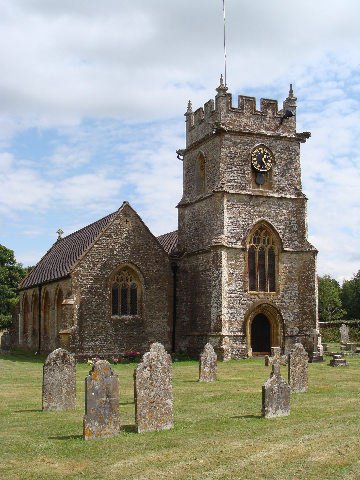
This church dates back to the Thirteenth Century. Slater and Carpenter refurbished the building between 1860 and 1865, including rebuilding the chancel.

http://www.opcdorset.org/ChetnoleFiles/Chetnole%20church%20b%20Jul2010r.jpg

Salviati inlaid the alabaster reredos with mosaic during this time.


Sources:
Three Valleys Team
British Listed Buildings
Dorset OPC Project

Tuesday, March 18, 2014

Church of the Holy Ghost, Genoa

Although there has been an English speaking, Anglican church in Genoa since at least 1818, the current church was built in 1873 by G.E. Street. The black and white stripes of the interior stone work reflect a Romanesque style.


Salviati made a mosaic altarpiece and four Evangelists for the church. While the church was partially damaged during World War II, the central reredos of The Good Shepherd has been restored. The flanking arcades that most likely contained the other mosaics, however, stand empty.


Sources:
Barr, Sheldon. Venetian Glass Mosaics: 1860-1917. London: Antique Collectors' Club, 2008. 127.
The Church of the Holy Ghost Genoa, Italy

Monday, February 24, 2014

St. Andrew's Moreton on Lugg

This Medieval church was reconstructed in 1867 by W.H. Knight of Cheltenham.


Salviati added the chancel wall mosaics of the "Heavenly Jerusalem" in 1887 after a commission by Harriet Evans, widow of Thomas Evans, owner of the nearby Morton Court.


Sources:
British Listed Buildings
Wikimedia Commons from Philip Halling
Pevsner, Nikolaus. Buildings of England: herefordshire. New Haven: Yale University Press, 1963. 256.
National Churches Trust
Duncumb, John et al. Collections Towards the History and Antiquities of the County of Hereford. Vol 3. London: John Murray, 1882. 145.
Kelly's Directory of Herefordshire (1895). 143.

Tuesday, January 21, 2014

St. Mary Magdalene Church, Altofts

This church was built by architects Richard Life Adams and John Kelly of Leeds between 1873-90. It was consecrated in 1878, by which time the reredos was also completed.


The Caen stone reredos was carved by Leeds sculptor Canova Throp. The mosaic embellishment was made by Salviati after Pietro Perugino's 15th century fresco in Florence's cloister of Santa Maria Maddalena dei Pazzi.


Perugino's "Crucifixion" depicts two additional figures: St. Bernard on the left in white and St. Benedict on the right in blue.


Salviati's interpretation for the mosaic reredos.


The Virgin Mary is on the left panel.


Mary Magdalene is seen praying at Christ's feet.

St. John the Baptist is on the right.

Sources:
Treasures Revealed in Wakefield 2010. 18.
Pevsner, Nikolaus. Yorkshire: The West Riding. New Haven: Yale University Press, 2001. 80.
"New Church of St. Mary Magdalene." The British Architect: A Journal of Architecture. Vol. 10. Nov 1878. 185.
JThomas on Geograph
Museums in Florence
Photographs of the reredos were kindly provided by the Church Warden of St. Mary Magdalene's, Altofts

Friday, January 17, 2014

All Saints Church, Lewes

This church has been in existence since at least 1148. With the exception of the tower, it was all demolished and rebuilt in 1805-07 by architect Amon Wilds (the elder). The sanctuary was modified and further extended in 1881-83 by William Basset-Smith and E.J. Munt.


Salviati reredos adorned the space behind the altar, which is now a small hallway. The reredos are presumed to still exist behind mirrors affixed to the walls.

The church was made redundant in 1975 and it is now an arts and crafts community center.

Sources:
Houghton, John. All Saints, Friar's Walk, Lewes. All Saints Arts and Youth Centre, 1991.
The Voice of Hassocks on Wikipedia

Wednesday, November 20, 2013

St. Saviour Church, Aberdeen Park

William White designed this church in 1865-66 with a distinct polychrome brickwork.


The stone triptych reredos contained a central crucifixion mosaic sometimes misattributed to Sir Henry Layard. Since Layard was a politician and explorer, this error was more than likely due to the fact that he was partners with Salviati in their joint mosaic business, which made the mosaic.

The church was closed in 1980 and the parish was united with Christ Church, Highbury Grove. In 1990, the dilapidated space was turned into the Florence Trust's artists studios.

View of the western end

View of the eastern end. The top of the stone reredos is visible above the white screen, which was installed to conserve the artifacts.


Sources:
Cherry, Bridget. London: North. New Haven: Yale University Press, 1998. 659.
Hadley, Dennis. "Powell's Opus Sectile Locations." pdf. 32.
Davies, John Andrew. "Site Unseen: St. Saviour's, Aberdeen Park, London." The Independent. Dec 19, 1995.
AIM25 'Islington: Churches', A History of the County of Middlesex: Volume 8: Islington and Stoke Newington parishes (1985), pp. 88-99.
The detailed photographs of the reredos was kindly provided by Neil Jefferies, Studio Manager at The Florence Trust.

Tuesday, November 19, 2013

St. Stephen's Lewisham

G.G. Scott designed this church and it was built between 1863-65.


The reredos were designed by Scott's pupil Charles Buckeridge and carved by James Redfern. Salviati provided the mosaic tessarae that were installed to decorate the reredos by the firm of Clayton and Bell in 1873.


Sources:
Salviati, Antonio. On Mosaics. Leeds: 1865. 52.
A Church Near You
Des Blenkinsopp on Geograph
Diocese of Southwark

Monday, November 11, 2013

In Detail: Christ Church, Southgate

Following-up on the initial post about the history of this church from January 11, 2013, I wanted to add these wonderful up-close pictures that were kindly provided by the Churchwarden of Christ Church, Southgate Mr. Phillip Dawson.


Tuesday, November 5, 2013

Parish Church of St. Saviour and St. Peter, Eastbourne

This church was designed by G.E. Street and built 1865-68.


Antique print from 1867 from the Illustrated London News

Salviati made the chancel mosaics. The six arcades behind the carved reredos depict the twelve Apostles.


Sources:
Sussex Parish Churches
The Voice of Hassocks on Wikimedia Commons
Wikipedia
St. Saviour Eastbourne
Ebay