Showing posts with label Chancel. Show all posts

Friday, February 4, 2022

Cathedral Church of St. Edmundsbury

In 1914, the former St. James' of Bury St. Edmunds became the cathedral church of the newly created Diocese of Edmundsbury and Ipswich. The original church was built in the Norman style and the nave dates to the early 16th century, but much of the current building was rebuilt and expanded since the 1960s. 

St. James' in 1779. Note separate Norman tower on the right.


St. James' circa 1870 after Scott's renovation.


St. James' in 2014 with its new, connected tower.

The redesigned chancel that G.G. Scott added in 1865-69 contained Salviati mosaics within alabaster reredos made by Farmer and Brindley and financed by bankers Oakes and Bevan. The raised quatrefoil center contained an alabaster cross flanked by the symbols for Alpha, Omega and XP on a golden mosaic base. The spandrils contained symbols of the Evangelists, as well as a pelican and the Holy lamb.

The chancel circa 1922 with the Salviati mosaics.

While the Baptismal font from 1870 (also by Scott) and numerous Victorian stained glass windows survived 20th century renovations, the reredos were removed and their fate is unclear.

Sources:

The National Archives. Cathedral Church of St. James, Bury St. Edmunds. Accessed January 30, 2022.
Barr, Sheldon. Venetian Glass Mosaics: 1860-1917. London: Antique Collectors' Club, 2008. 124.
Tymms, Samuel. "A Handbook of Bury St. Edmunds in the County of Suffolk." 6th ed. London, 1891. p. 57.
Churches and Family Tree. Stepneyrobarts blog post: Bury St. Edmunds. Accessed January 30, 2022.
St. Edmundsbury Cathedral. Accessed January 30, 2022.
Wikipedia, Photo by David Iliff: St. Edmundsbury Cathedral.
St. Edmundsbury Chronicle. Accessed January 30, 2022.
An antique line engraving published by F. Lankester. Circa 1870. Later coloured by hand.
Francis Frith: Bury St. Edmonds.


Thursday, February 12, 2015

St. Mark's Church, Hamilton Terrace

This Gothic style church by Thomas Cundy was consecrated in 1847. The architect's son Thomas Cundy II finished the spire in 1864. E.B. Ferrey also added a new chancel in 1878.


The Venice and Murano Mosaic Company made the six mosaic panels for the pulpit around 1879. They depict the Four Evangelists flanking Sts. Peter and Paul.


Sources:
The Builder. July 26, 1879. 842.
Speel, Bob. St. Mark's Hamilton Terrace - A Church with Mosaics. 
"Church of St. Mark, Hamilton Terrace". English Heritage.
Images of England: Church of St. Mark Hamilton Terrace. English Heritage.

Tuesday, January 27, 2015

St. John the Baptist, Aldford

Designed by architect John Douglas, this church was built in 1865-66 at the expense of Richard Grosvenor, the 2nd Marquess of Westminster.


The church's reredos contains five mosaic panels by Salviati. Morris and Co. made the stained glass in the East window after a design by Edward Burne-Jones.


Sources:
English Heritage, "Church of St John the Baptist, Aldford (1135984)", National Heritage List for England
St. John the Baptist, Aldford. Wikipedia. 
A Church Near You. 
British Listed Buildings.

Tuesday, November 4, 2014

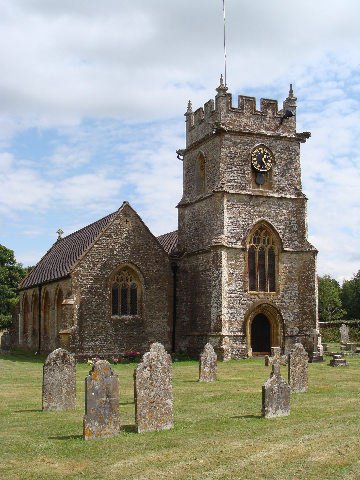
St. Peter's Church, Chetnole

This church dates back to the Thirteenth Century. Slater and Carpenter refurbished the building between 1860 and 1865, including rebuilding the chancel.

http://www.opcdorset.org/ChetnoleFiles/Chetnole%20church%20b%20Jul2010r.jpg

Salviati inlaid the alabaster reredos with mosaic during this time.


Sources:
Three Valleys Team
British Listed Buildings
Dorset OPC Project

Wednesday, November 20, 2013

St. Saviour Church, Aberdeen Park

William White designed this church in 1865-66 with a distinct polychrome brickwork.


The stone triptych reredos contained a central crucifixion mosaic sometimes misattributed to Sir Henry Layard. Since Layard was a politician and explorer, this error was more than likely due to the fact that he was partners with Salviati in their joint mosaic business, which made the mosaic.

The church was closed in 1980 and the parish was united with Christ Church, Highbury Grove. In 1990, the dilapidated space was turned into the Florence Trust's artists studios.

View of the western end

View of the eastern end. The top of the stone reredos is visible above the white screen, which was installed to conserve the artifacts.


Sources:
Cherry, Bridget. London: North. New Haven: Yale University Press, 1998. 659.
Hadley, Dennis. "Powell's Opus Sectile Locations." pdf. 32.
Davies, John Andrew. "Site Unseen: St. Saviour's, Aberdeen Park, London." The Independent. Dec 19, 1995.
AIM25 'Islington: Churches', A History of the County of Middlesex: Volume 8: Islington and Stoke Newington parishes (1985), pp. 88-99.
The detailed photographs of the reredos was kindly provided by Neil Jefferies, Studio Manager at The Florence Trust.

Tuesday, November 5, 2013

Parish Church of St. Saviour and St. Peter, Eastbourne

This church was designed by G.E. Street and built 1865-68.


Antique print from 1867 from the Illustrated London News

Salviati made the chancel mosaics. The six arcades behind the carved reredos depict the twelve Apostles.


Sources:
Sussex Parish Churches
The Voice of Hassocks on Wikimedia Commons
Wikipedia
St. Saviour Eastbourne
Ebay

Monday, November 4, 2013

Not Salviati: Folkestone Parish Church

Occasionally, I come across information about a mosaic linked to Salviati that turns out to be incorrect. This chancel mosaic happens to be such a misattribution.

Also known as the Church of St. Mary and St. Eanswythe, much of the 13th century building was rebuilt in the 19th century. R.C. Hussey rebuilt the nave and north aisle 1856-59, the south chancel aisle and transept were rebuilt in 1869, while Stallwood added the west window and porch in 1872.


The chancel is lined with twelve trefoil topped mosaic panels depicting the Apostles, while a central panel shows five angels with an inscription on the base made in loving memory of Frederick Augustus Howe Fitz Gerald. Some sources have erroneously credited Carpenter with the mosaic work, while others have directly attributed it to Salviati. However, they were made by A. Cappello, an Italian mosaicist who at one point worked with the Salviati firm and used Salviati's techniques, but who ran his own workshop in London at the time he made these mosaics.


Sources:
"The Ancient Church of Folkestone, and Its Founders." The Churchman. November 20, 1897. 667.
"Mosaic Pictures for the Oratory, Brompton." The Building News and Engineering Journal. Vol. 45. 586. October 12,1883.
Bob Speel's website
British Listed Buildings
Kent Churches
TripAdvisor

Tuesday, October 29, 2013

All Saints' Church, Windsor

A.W. Blomfield designed this church and it was built 1863-64. The daughter of Queen Victoria, H.R.H. the Crown Princess of Prussia laid the first stone.


Salviati made the large, floriated mosaic cross above the chancel arch after designs by Blomfield.


Sources:
Salviati, Antonio. On Mosaics (generally). Leeds, 1865. 45.
The Royal Windsor Forum. June 3, 2011
"All Saints' Church, Windsor." The Civil Engineer and Architect's Journal. vol. 27. Dec. 1, 1864. 364.
Basher Eyre on Geograph

Tuesday, October 15, 2013

All Saints' Church, Blackheath

Designed by Benjamin Ferry, this church was built 1857-67. A.W. Blomfield added the vestries in 1890 and the porch in 1899.


Salviati mosaics decorate the church's chancel, with small arcades containing six Apostles on each side.


Sources:
Barr, Sheldon. Venetian Glass Mosaics: 1860-1917. London: Antique Collectors Club, 2008. 124.
TheWalkerTourch on Redbubble
A Church Near You
Diocese of Southwark

Wednesday, September 11, 2013

The Bridge Church, Headless Cross

Formerly known as St. Luke's, this church was built in 1867 by architect Frederick Preedy.


Salviati decorated the stone altar sometime before 1878 with mosaics of the Lamb of God as well as the alpha and omega.


Sources:
The Bridge: St. Luke's History
Tudor Barlow's flickr Photostream
Murray, John. Handbook for England and Wales; alphabetically arranged. 1878. 6.

Thursday, June 20, 2013

Royal Military Chapel, Wellington Barracks

The chapel was built in 1838 and it has served the seven Regiments of the Household Division. It is the only remaining military chapel in London.


G.E. Street remodeled the chapel in 1877-78.


1882 interior drawing


1899 photograph


The chapel was heavily damaged by bombing during World War II, first during the blitz in 1940 and 1941, and then more seriously in 1944 when 121 soldiers and civilians were killed.


It was rebuilt in the early 1960s and the chancel mosaic can still be seen in the original chancel, which had remained intact.


The chancel is decorated with three scenes: the Bearing of the Cross, the Crucifixion and the Descent from the Cross. John Clayton designed the cartoons for the mosaics, which were executed by Salviati and Burke.


Sources:
London Wellington Barracks. Royal Military Chapel, Wellington Barracks. London: Hatchards, Piccadilly, 1882. 76.
"The Royal Military Chapel Wellington Barracks." The Architect. May 29, 1879. 331.
John Salmon on Wikimedia Commons
Wikipedia
British Army
British Listed Buildings
Colin Hepburn's flickr Photostream
English Heritage
War 44 Forums
Paul Farmer on Geograph
The Guards Chapel Tragedy
eBay
Prints-4-All

Tuesday, May 28, 2013

Church of the Blessed Virgin Mary, Compton Pauncefoot

This 15th century church was renovated by William Slater in 1864.


Salviati mosaics adorn the reredos.


Sources:
Mike Searle on Geograph 
Trish Steele on Wikimedia Commons
Wikipedia
Salviati, Antonio. On mosaics. A Paper read before the Leeds Philosophical and Literary Society on February 21st, 1865. 51.
Somerset Bloke's flickr' Photostream

Friday, May 24, 2013

St. Stephen's Church, Hampstead

S.S. Teulon's 1871 church became redundant in 1977 and the interior was severely vandalized over the next twenty years.
 

In 1998, the church was joined with the school next door and since then, the building has been restored and is now used to hold events such as weddings or birthday celebrations.


Salviati mosaic roundels of various Passion symbols can still be found in the former chancel, while most in the nave seem to have been lost. 


A few roundels featuring angels that surround a rose window above the entrance to the side chapel are intact.


Sources:
Cherry, Bridget. The Buildings of England: London 4: North. New Haven: Yale University Press, 1998. 206.
Barr, Sheldon. Venetian Glass Mosaics: 1860-1917. London: Antique Collectors' Club, 2008. 125.
Telegraph UK
Genshin's Intuition's flickr Photostream
Pashmin@'s flickr Photostream
IanVisits' flickr Photostream